
Auto diagnostics—also called vehicle diagnostics or car diagnostics—is the process of identifying mechanical or electrical issues in a vehicle using advanced tools and onboard computer systems.
When your check engine light turns on, it’s more than just an annoyance—it’s your vehicle’s way of saying something needs attention. Thanks to modern auto diagnostics, we can identify problems faster than ever. But here’s the truth most drivers don’t realize: the real power of diagnostics lies not in retrieving error codes, but in interpreting them correctly.
In this blog, we’ll explain what auto diagnostics are, how they work, and why skilled interpretation is the key to fixing your vehicle properly.
How Auto Diagnostics Work
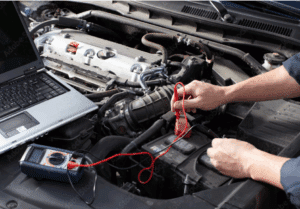
Here’s a breakdown of the process:
1. A Warning Light Appears
The dashboard lights up (usually the check engine light) when the system detects a fault.
2. A Scanner Retrieves Trouble Codes
Technicians connect a diagnostic tool to the vehicle’s OBD-II port to pull error codes.
3. Interpreting the Code (The Most Important Step!)
Here’s where experience and expertise come in. Codes provide a starting point, but they don’t tell the full story. A DTC might say “O2 sensor fault,” but the root issue could be:
A vacuum leak
A dirty mass airflow sensor
An exhaust leak
Or even a bad catalytic converter
Without expert interpretation, you’re just guessing.
4. Pinpointing the Real Problem
Technicians combine data from multiple systems, perform hands-on tests, and use their training to accurately pinpoint the root cause—not just the symptom.
5. Performing the Repair and Resetting the System
Once the issue is correctly identified, it’s repaired, tested, and the system is reset.
Why Proper Interpretation Is Critical in Auto Diagnostics
A diagnostic scan alone doesn’t fix your car. Many parts stores offer free code scans, but this just gives you the “what”—not the “why.” The most important part of auto diagnostics is correctly interpreting the code and tracing it to the actual source of the problem.
Some of the benefits to a skilled and professional diagnosis include:
Avoids Misdiagnosis: Prevents replacing the wrong parts.
Reduces Repair Costs: Saves money by addressing the true issue.
Increases Repair Accuracy: Leads to long-term, reliable fixes.
Protects Your Vehicle: Prevents further damage from unresolved problems.
Real-World Example: Why Interpretation Matters
Imagine your car shows a P0301 code (misfire in cylinder 1). You might think the spark plug needs replacing—but the real problem could be:
A bad ignition coil
A faulty fuel injector
Low compression
A damaged wire
A skilled technician will run compression tests, inspect ignition timing, and test fuel delivery to pinpoint the real problem—saving you from unnecessary parts and frustration.
Can You Do Auto Diagnostics at Home?
You can purchase an affordable OBD-II scanner and read basic codes yourself. It’s a great first step, especially for minor issues. But for complex problems—or when you want certainty—it’s always best to visit a trusted auto repair shop or certified technician. That’s where expert diagnostic interpretation really pays off.
Common Car Diagnostic Codes (DTCs)
Here are some frequently seen trouble codes:
P0300 – Random/multiple cylinder misfire
P0420 – Catalyst efficiency below threshold
P0171 – System too lean
P0455 – Large EVAP leak detected
These codes need further inspection before any parts are replaced—yet another reason why proper interpretation is essential.
Final Thoughts: Don’t Guess—Diagnose Accurately
Auto diagnostics isn’t just about scanning codes. It’s about smart, expert interpretation that leads to lasting repairs. Whether your check engine light is flashing or you’re preparing for a long road trip, getting a professional diagnostic check ensures your car is fixed right the first time.
At Horeb Auto Repair we are ready to do the diagnostic for you!