
Which window tint should I choose?
Dyed film gives the classic tinted look and rejects around 43% of heat. Ceramic film rejects around 70% of heat, blocks UV, and cuts glare with a clear view out. For a Houston daily driver that sits in the sun, ceramic is the one most people are glad they picked.
Dyed or ceramic
Dyed film is the traditional option, a good look at a lower cost, with roughly 43% heat rejection. Ceramic film is engineered for heat: about 70% rejection, strong UV protection, and a clear, undistorted view. Both come in limo, medium, and light shades.
Picking your shades
For the front windows we recommend 35%, which keeps the view clear at night and still cuts heat. For the rear, most people choose 5% for maximum privacy or 20% for a balance of privacy and visibility.
See the shades before you pick
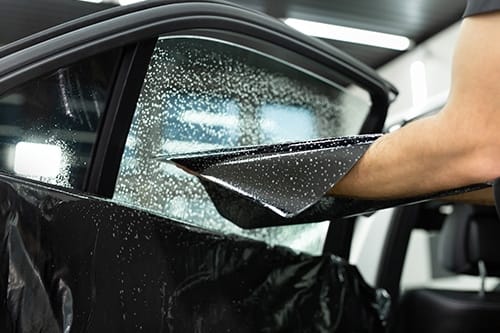
The percentage is how much light the film lets through, so a lower number is darker. 5% is limo dark, 20% is a solid medium, and 35% is light enough to see out of easily at night. Numbers are hard to picture, so try the shades on the preview above and see how each one looks on a car. Then bring the car in and we will show you film samples against your own glass.
Why tint matters in Houston
A car parked in the Houston sun turns into an oven. The seats, steering wheel, and dash get hot to the touch, and the A/C has to work hard just to catch up. Good film cuts the heat coming through the glass, so the cabin cools faster. It also blocks UV, which protects your skin on long drives and keeps the dash and seats from fading and cracking.
Texas tint rules
Texas has rules for how dark each window can be, and they are different for the front side windows, the rear windows, and the windshield. We will walk you through Texas tint rules for your windows before we install anything, so your car looks the way you want and you are not guessing at what is allowed.
Clean, careful installation
Tint is only as good as the install. We clean the glass, cut the film to fit your windows, and apply it so the edges sit tight without bubbles, dust, or peeling corners. If you have old film that is purple, bubbled, or peeling, we can take it off first. We will tell you how long to keep the windows rolled up while the film cures.