Most people think about heat when they think about window tint. In Houston that makes sense. But there is a second job tint does all day, every day, that you never feel: blocking UV. It protects your skin while you drive, and it protects the inside of your car while it sits in the sun.
What UV does inside a car
Ultraviolet light is the part of sunlight you cannot see or feel. It is the part that burns skin and breaks down materials over time. Your windows let a lot of daylight in, and the more time your car spends in the sun, the more UV reaches the seats, dash, and you.
Protecting your skin on long drives
If you commute across Houston, drive for work, or spend weekends on the road, you spend hours next to a side window with the sun on you. Window film blocks UV at the glass, which protects your skin on those long drives. It is one of the simplest health upgrades you can make to a car you spend a lot of time in.
Ceramic film offers strong UV protection, along with about 70% heat rejection and a clear view out. Dyed film also helps, and it rejects roughly 43% of the heat.
Protecting your interior
Look at the dash of a car that has spent years parked in the sun without tint. The color fades, the top gets dry, and in time it can crack. Seats do the same thing, especially darker leather and vinyl. A car that sits in an open lot or on a driveway takes that hit every day.
Tint blocks UV before it reaches the cabin, which helps keep your dash and seats from fading and cracking. That keeps the car looking newer and helps it hold its value when it is time to sell or trade.
Heat and UV together
Heat and UV usually arrive together, and tint handles both. A cooler cabin means the seats and dash do not get as hot to the touch, the A/C catches up faster, and the materials take less of a beating. Glare drops too, which makes the drive easier on your eyes.
Do you need dark tint for UV protection?
No. You do not have to pick the darkest shade to get UV protection. Shade is about how much light gets through, and it is a separate choice from the film itself. That is good news for your front windows, where we usually recommend 35% so the view stays clear at night.
Texas also has rules for how dark each window can be. We walk you through them for your windows before we install anything.
Which film should you pick?
If UV and heat protection matter most to you, ceramic is the film built for the job. If you want the tinted look and solid everyday protection at a lower cost, dyed film is a good choice. We carry dyed film in 5%, 20%, and 35%, and ceramic film in 5%, 20%, and 30%.
Not sure? Try both on the shade preview on our window tint page, or read our breakdown of ceramic vs dyed window tint.
Get a price
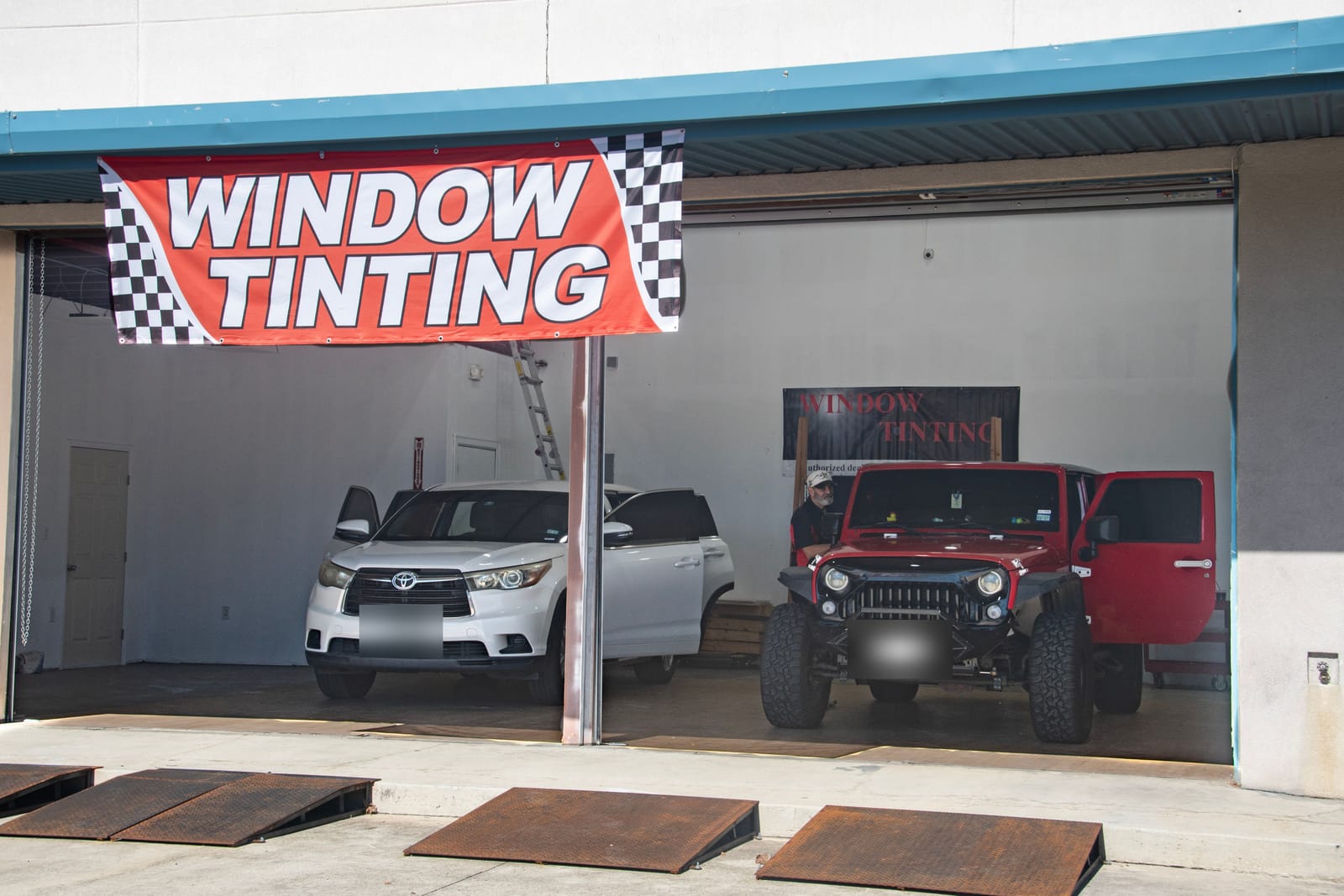
Send the vehicle and which windows on our tint quote form. The shop will text or call you back with a price. Every tint job is installed in house at our Bissonnet Street shop, and every one carries our lifetime tint warranty.