Every tint job at Horeb starts with one question: dyed film or ceramic film? Both make your car look sharper and both cut the sun. They are not the same film, though, and in a city where a parked car bakes from April to October, the difference shows up every afternoon. Here is how the two compare, in plain terms.
Dyed film: the classic tinted look
Dyed film is the traditional option. It gives your windows that clean, darkened look at a lower cost, and it rejects roughly 43% of the heat coming through the glass. For a lot of drivers that is a real upgrade over bare glass. The car is more private, the glare is softer, and the cabin is not quite as brutal when you open the door at 3 PM.
We carry dyed film in three shades: 5%, 20%, and 35%. The number is how much light gets through, so 5% is limo dark and 35% is the lightest of the three.
Ceramic film: built for heat
Ceramic film is engineered for one job above everything else: keeping heat out. It rejects about 70% of the heat, strong UV protection is built in, and it cuts glare while keeping a clear, undistorted view out of the glass. You do not have to go darker to get the cooling, because the heat rejection comes from the film itself, not from how dark it is.
We carry ceramic film in 5%, 20%, and 30% shades.
Side by side
- Heat rejection: about 43% for dyed, about 70% for ceramic.
- Shades we carry: dyed in 5%, 20%, and 35%. Ceramic in 5%, 20%, and 30%.
- UV: both films block UV. Ceramic is the stronger of the two.
- View: ceramic keeps the clearest view out, with less glare.
- Cost: dyed costs less up front. Ceramic costs more and works harder.
- Warranty: every tint job we install carries a lifetime warranty.
Which one fits the way you drive?
Think about where your car spends its day. If it sits in an open parking lot at work, on a driveway with no shade, or in the pickup line at school, ceramic is the film most people are glad they picked. The extra heat rejection means a cooler cabin, a steering wheel you can actually hold, and an A/C that catches up faster.
If the car lives in a garage, you mostly drive early or late, or you want the tinted look on a budget, dyed film is a solid choice. It still cuts heat and glare, and it still looks great.
There is no wrong answer here. There is only the answer that fits your car and your budget. If you are on the fence, ask us. We will tell you honestly which one we would put on a car that drives like yours.
Shade is a separate choice
Film type and shade are two different decisions. You can have dark dyed film or light ceramic film. For the front windows we usually recommend 35%, which keeps the view clear at night and still cuts heat. For the rear, most people pick 5% for maximum privacy or 20% for a balance of privacy and visibility.
Texas also sets rules for how dark each window can be. We walk you through them for your windows before we install anything, so you are not guessing at what is allowed.
Want to see the shades before you decide? Try the shade preview on our window tint page. Pick a film, pick a shade, and watch the glass change on the car.
Getting a price
Prices depend on the vehicle, the film, and which windows you want done. The quickest way to a number is our tint quote form. Tell us the year, make, and model and which windows, and the shop will text or call you back with a price. When you bring the car in, we will hold film samples against your own glass so you can see exactly what you are getting.
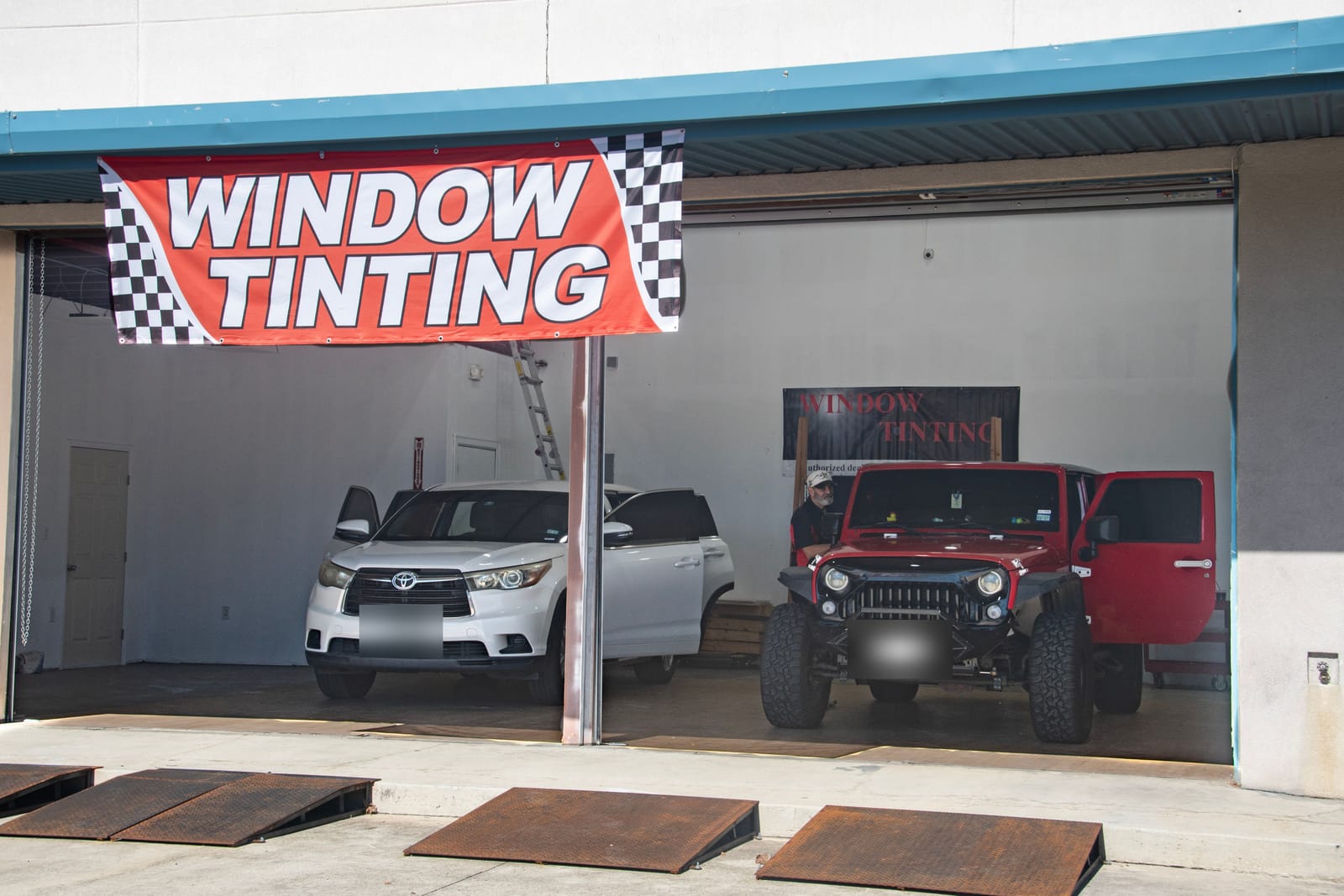
Every tint job is installed in house at our shop on Bissonnet Street in Southwest Houston, and every one carries our lifetime tint warranty.